
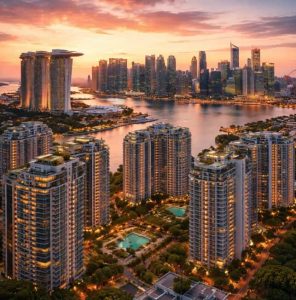
 Singapore’s skyline did not change by accident. It is the physical outcome of decades of economic growth, careful planning, and a constant need to use land wisely. As the economy expanded, so did expectations around how people live, work, and invest, encouraging a stronger focus on modern home design within high-density developments. Modern condominium design reflects all of this. Every layout choice, shared facility, and architectural detail is shaped by economic realities.
Economic growth and land pressure
Economic success attracts people, capital, and businesses. In Singapore, that success also brings intense pressure on land. As a city-state with limited space, rising housing demand pushes developers to think vertically and efficiently. Condos grow taller, footprints shrink, and designs become more compact without sacrificing comfort.
This pressure explains why modern units emphasize smart layouts. Bedrooms are smaller but better planned. Storage is built in. Living and dining areas merge into flexible spaces. These choices are not just design trends. They are direct responses to high land values driven by a strong economy.
Density without discomfort
High-density living can feel crowded if poorly designed. Singapore’s economic growth has given developers both the incentive and the budget to avoid that outcome. Condos today focus on creating a sense of openness within dense environments.
Sky gardens, elevated decks, and landscaped podiums are common. These features provide visual relief and shared green space, even in tightly packed developments. Developers understand that buyers are willing to pay more for homes that feel calm and breathable, especially in a fast-paced economy.
Government planning also plays a role. Agencies like Urban Redevelopment Authority guide density through zoning and plot ratio controls. This balance between economic demand and regulation shapes how tall, wide, and complex condo projects can be.
Amenities as economic signals
Modern Singapore condos are no longer just places to live. They are lifestyle products. As incomes rise and buyer profiles diversify, amenities become a way to signal value.
Pools, gyms, co-working lounges, and function rooms are now expected rather than optional. In premium developments, amenities go further. Think private dining rooms, wellness spaces, and rooftop lounges with city views. These features respond to a population that works long hours, values convenience, and is willing to pay for quality shared spaces.
Economic growth also fuels competition among developers. When buyers have options, design quality becomes a differentiator. Better amenities help justify higher prices in a competitive market.
Mixed-use living and productivity
As Singapore’s economy evolved toward services, finance, and technology, the line between living and working blurred. Condo design followed. Many new projects are part of mixed-use developments that combine homes, offices, retail, and transport links.
This trend reflects economic priorities. Time is valuable in a high-productivity economy. Living closer to work, shopping, and transit reduces commuting stress and increases efficiency. Developments near business hubs like Marina Bay or integrated with transport nodes attract strong demand.
Mixed-use condos also support economic resilience. Retail and office components generate additional revenue streams, making projects more viable in changing market conditions.
Sustainability driven by long-term economics
Sustainability in condo design is often discussed as an environmental issue. In Singapore, it is also an economic one. Energy-efficient buildings cost less to operate over time and remain attractive to buyers and tenants.
Green facades, solar panels, and natural ventilation features are increasingly common. Developers respond to government incentives, rising energy costs, and buyer awareness. In a mature and wealthy market, sustainability is no longer a bonus. It is part of protecting long-term asset value.
Economic growth gives the country the resources to invest in these features at scale. It also creates a buyer base that understands the long-term savings and prestige associated with green living.
Technology and smart living
A strong economy accelerates technology adoption. Modern condos in Singapore often include smart home systems, keyless entry, and app-based facility booking. These features align with a tech-savvy population and a workforce accustomed to digital convenience.
Smart design also helps manage density. Automated lighting, security, and energy monitoring improve efficiency without increasing manpower costs. For developers and management corporations, this matters in a high-wage economy.
Technology is not added for novelty. It reflects economic conditions where efficiency, safety, and convenience directly influence property value.
Design shaped by investment demand
Condos in Singapore are not only homes. They are investment assets. Economic growth attracts local and foreign investors who expect liquidity, rental appeal, and long-term appreciation.
This influences design in subtle ways. Neutral interiors appeal to a wider tenant pool. Durable materials reduce maintenance costs. Unit mixes are carefully planned to balance owner-occupiers and renters.
Proximity to transport, especially MRT lines, remains critical. Easy access supports rental demand and resale value. Even layout choices reflect investor logic, favoring practical designs that age well in a competitive market.
A reflection of economic confidence
Modern condo design in Singapore ultimately reflects economic confidence. Growth enables experimentation, higher standards, and long-term thinking. It allows developers to invest in quality, and buyers to expect more from their homes.
At the same time, constraints keep design grounded. Limited land and careful regulation prevent excess. The result is a housing landscape that feels dense but deliberate, modern but functional.
As Singapore’s economy continues to evolve, condo design will evolve with it. Not through radical shifts, but through steady refinements that respond to how people live, work, and invest in a prosperous city.